"The One Who Spoke for the Wild©"
Release Date: August 7th, 2025
Lyrics by M. S. McKenzie (Unless Otherwise Noted) | Music Performed by Songs Across America or American Storyteller Music, All Songs Are Protected by ©
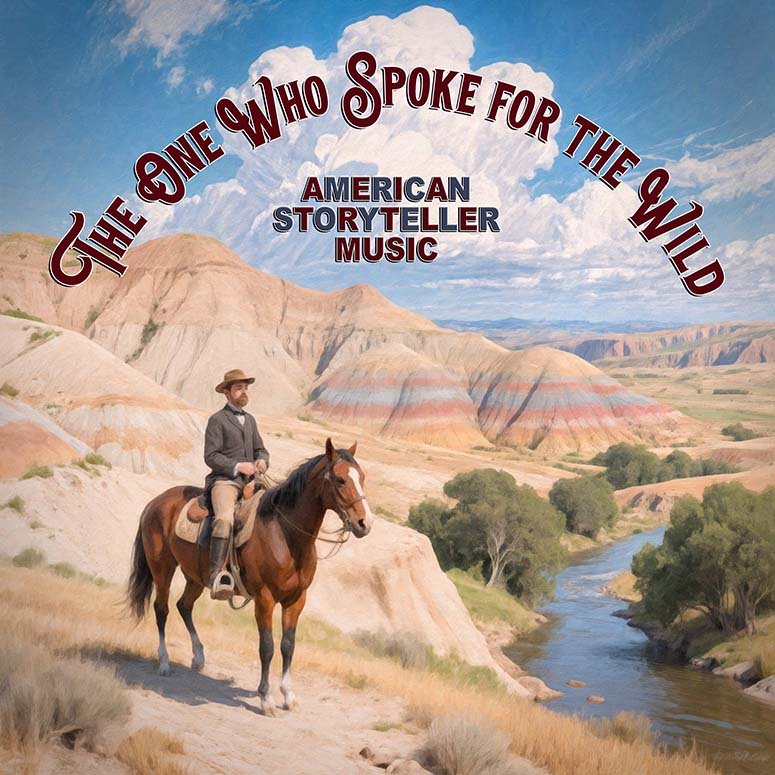
Streaming Services Music Link
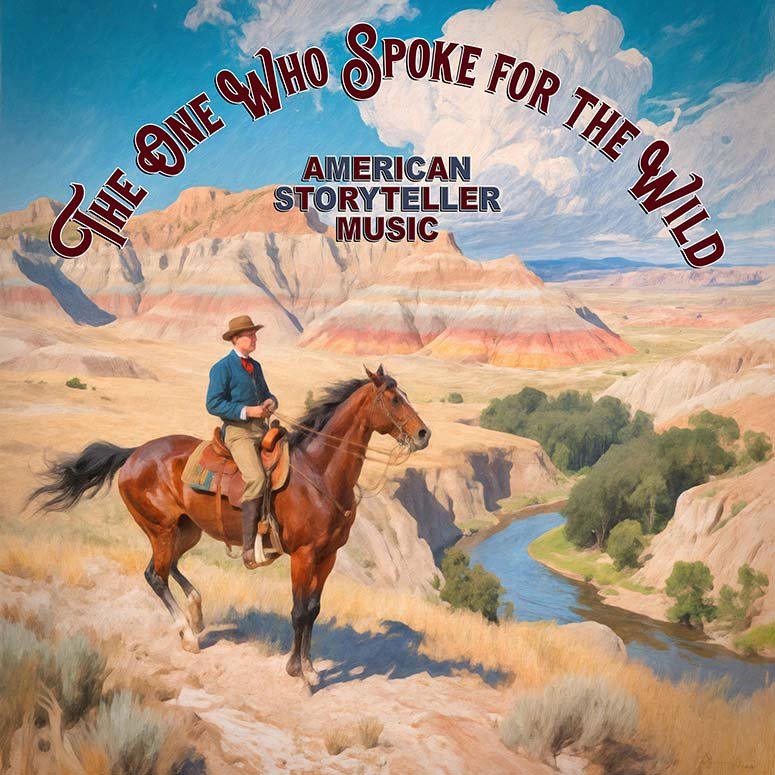
Streaming Services Music Link
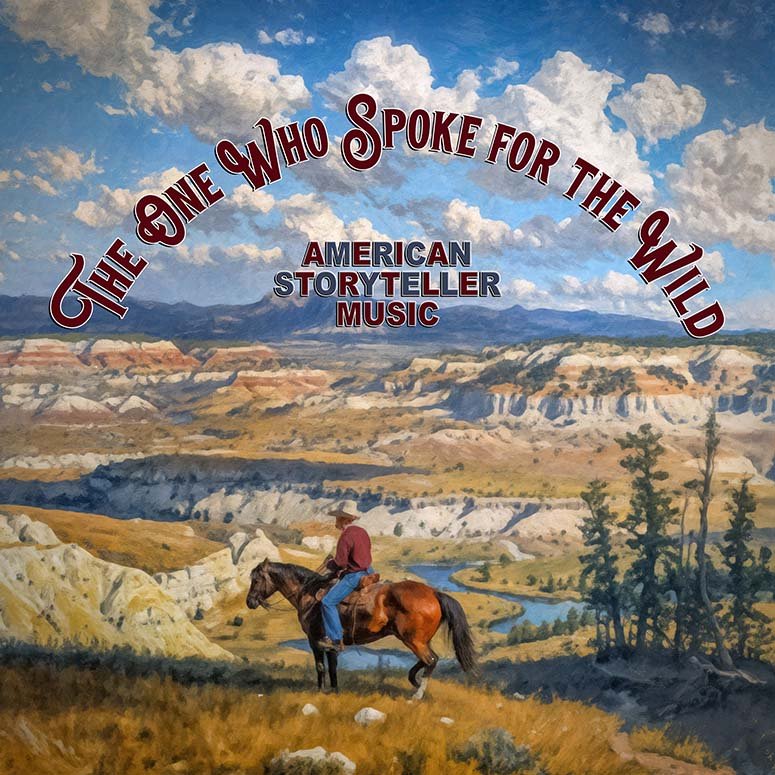
Streaming Services Music Link
~ Associated State Links ~
ND Home Pg. | ND Gallery Pg.
| ND Attractions | Best Small Towns | Best Small Cities
"The One Who Spoke for the Wild"
Why I Wrote This Song
I wrote "The One Who Spoke for the Wild" about the specific grief that sent Theodore Roosevelt to the North Dakota Badlands, mourning both his wife Alice and his mother, who died on the very same day. He came to mourn his dear Alice, and his mother too, Teddy's young, New York City heart was torn in two, and I wanted the song to start from that devastation rather than skip straight to the conservation legacy everyone already knows him for.
The story behind the song is what the Badlands actually did for him, chasing storms and wrangling grief with every mile he'd ride, the rancher's life reshaping him into someone born anew. I wanted the land to be understood as genuinely therapeutic rather than just a backdrop for his political career, a place that could heal him could even heal him too, before he ever became the president who protected so much of it.
What I care about most is the line he learned the West was more than land to tame, it was a legacy to honor, not a trophy to claim, because I think that's the actual turn in his life that made the national parks and monuments possible. Songs Across America has room for real historical figures whose grief led them somewhere unexpected, and Roosevelt's Badlands years are exactly that kind of turn, private devastation becoming a public gift to the whole country.
Genre:
Reverent, sweeping Americana ballad built on a proud, rising chorus, structured as a journey from personal devastation through Badlands healing to a lasting conservation legacy.
Theme:
Grief transformed into purpose, the healing power of the North Dakota Badlands, Theodore Roosevelt's conservation legacy, and the shift from taming land to honoring it as legacy.
Primary Subject:
Theodore Roosevelt's transformative years ranching in the North Dakota Badlands after the deaths of his wife and mother, and the conservation legacy that grew from them.
Mood:
Grieving and searching at the outset, deepening into healing and purpose, and closing on proud, historic legacy.
Core Message:
Sometimes the deepest personal grief leads a person somewhere they never expected, and what began as private devastation in Theodore Roosevelt's life became a legacy of conservation that still protects the country's wild places today.
Original Lyrics by M.S. Mckenzie, All Rights Reserved
[Intro]
He came to mourn his dear Alice, and his mother too
Teddy’s young, New York City heart was torn in two
But he found solace where the Little Missouri bends
Under the cottonwood trees and a sky that never ends
[Verse 1]
In the Badlands of Dakota, where the wild things still run free
He rode the high butes and slept beneath the cottonwood trees
He chased the storms and wrangled grief with every mile he’d ride
Where painted canyons carved his name in that wide western sky
The rancher’s life reshaped him into someone born anew
He found that the land can heal…
…it could even heal him too
[Chorus]
He spoke for cleaner rivers, and stood for redwood trees
He carved out a progressive vision of what America could be
With a voice like thunder and a bold new plan to turn the tide
He gave us parks and monuments so Earth’s soul could abide
To Teddy Roosevelt, a statesman who spoke for the wild
A fearless, rough-riding child of the untamed mile
[Verse 2]
Before the Oval Office called, he faced great hardship and loss
But in that prairie solitude, he found purpose through the frost
He saw the bald eagle soar high above the elk-filled plains
And vowed to guard those sacred sites from trapper and train
He learned the West was more than land to tame
It was a legacy to honor, not a trophy to claim
[Chorus]
He spoke for cleaner rivers, and stood for redwood trees
He carved out a progressive vision of what America could be
With a voice like thunder and a bold new plan to turn the tide
He gave us parks and monuments so Earth’s soul could abide
To Teddy Roosevelt, a statesman who spoke for the wild
A fearless, rough-riding child of the untamed mile
[Instrumental: Horns and strings swell with fiddle leads over acoustic rhythm – evokes both grandeur and motion across landscapes]
[Verse 3]
Pelican Island, Devil’s Tower, and Muir Woods in the mist
He made the Antiquities Act a preservationist’s gift
Five national parks, eighteen monuments, and more
One hundred and fifty forests along with the wildlife they store
He once said, “Leave it better than we found it, bold and free”
A creed still echoed in the branches of every old-growth tree
[Bridge]
And now in North Dakota where the buffalo roam
There’s a park that bears his name, his second home
The wind still whispers through the juniper and sage
Of the man who turned his sorrow into a memorable age…
[Final Chorus]
He spoke for cleaner rivers, and stood for redwood trees
He carved out a progressive vision of what America could be
With a voice like thunder and a bold new plan to turn the tide
He gave us parks and monuments so Earth’s soul could abide
To Teddy Roosevelt, a statesman who spoke for the wild
A fearless, rough-riding child of the untamed mile
[Instrumental Outro]
Song Description
Here is a detailed description exploring the song's historical narrative, emotional foundation, conservation message, symbolism, and musical character.
"The One Who Spoke for the Wild" is a sweeping historical tribute to Theodore Roosevelt and the profound role that wilderness played in shaping both his personal recovery and his public legacy. Beginning with the devastating deaths of his wife, Alice, and his mother on the same day, the song follows Roosevelt westward into the Dakota Badlands, where hardship, solitude, ranch life, wildlife, and the immense openness of the landscape helped him rebuild his physical and emotional strength. From there, the lyrics trace his transformation into one of America's most influential conservation-minded presidents.
At its heart, the song is about the healing power of nature and the responsibility that can grow from gratitude. Roosevelt does not merely find comfort in the West and then leave it behind. His experience there changes how he understands land, wildlife, progress, and national responsibility. The wilderness that helps restore him eventually becomes something he feels compelled to defend for future generations.
The title, "The One Who Spoke for the Wild" presents Roosevelt as an advocate for landscapes and animals unable to defend themselves against unchecked exploitation. The phrase recognizes his forceful personality and political influence, but it also gives him the role of interpreter. Through policy, speeches, executive action, and public leadership, he translated his love of the outdoors into a national conservation movement.
The instrumental introduction could begin with a restrained and mournful tone, reflecting the personal tragedy that sent Roosevelt west. Acoustic guitar, low strings, piano, or a solitary fiddle could create an intimate atmosphere before the arrangement gradually opens into the wider sound of the plains.
The opening lines establish the emotional foundation immediately. Roosevelt comes to the West grieving both his wife and his mother, whose deaths left his "young, New York City heart" divided by sorrow. The reference to New York City emphasizes how far removed he was from the open terrain of the Little Missouri. He arrives from a dense, urban environment and enters a landscape defined by distance, silence, wind, and seemingly endless sky.
The phrase "heart was torn in two" is direct and appropriately simple. Roosevelt's grief was not abstract. It was the collapse of his immediate family world. The song therefore begins not with political ambition or presidential achievement, but with a deeply personal crisis.
The Little Missouri River becomes the first symbol of healing. Its bends, cottonwoods, and broad skies provide a place where Roosevelt can withdraw from the expectations of his former life. The river is not presented as magically erasing grief. Instead, it offers enough space for him to endure it.
The cottonwood trees are important recurring elements in the landscape. Common along western rivers and floodplains, they provide shade and shelter in otherwise exposed country. Their presence gives the opening scene a feeling of refuge. Beneath them, Roosevelt is able to mourn privately while the endless sky reminds him that life exists beyond the boundaries of his immediate pain.
The first verse moves fully into the Dakota Badlands. The region is described as a place where wild creatures still run free, immediately connecting physical wilderness with emotional release. Roosevelt enters a landscape that has not been arranged for comfort. Its eroded formations, steep ridges, prairie winds, sudden storms, harsh winters, and extreme temperatures demand endurance.
The reference to riding the high buttes places him above the surrounding terrain, where broad views would stretch across painted ridges, river bottoms, and grasslands. The elevated landscape becomes symbolic. As Roosevelt climbs physically, he also begins to rise out of emotional devastation.
Sleeping beneath cottonwood trees suggests a stripped-down existence far removed from the privilege and refinement associated with his New York upbringing. Ranch life required physical labor, exposure to weather, practical judgment, and self-reliance. These experiences helped reshape Roosevelt's public identity and his understanding of strength.
The line "He chased the storms and wrangled grief with every mile he'd ride" is one of the song's strongest expressions of emotional struggle. The language of ranching is applied to sorrow itself. Grief becomes something wild and difficult, something that cannot simply be dismissed but must be confronted, endured, and gradually brought under control.
The storms are both literal and internal. The Badlands are known for rapidly changing weather, but the violent skies also mirror Roosevelt's turbulent emotional state. By riding through them, he appears to be moving directly into hardship rather than avoiding it.
The painted canyons are described as carving his name into the western sky. This reverses the usual relationship between human beings and landscapes. Roosevelt does not conquer or carve the land. The land carves him. It shapes his character, public image, and future convictions.
The phrase "wide western sky" reinforces the transformative scale of the region. In the East, Roosevelt's grief may have felt enclosed by rooms, streets, social expectations, and memories. In Dakota, the horizon offers a broader perspective. His pain remains real, but it becomes part of a much larger world.
The rancher's life allows Roosevelt to become "someone born anew." This language presents the Badlands experience as a form of rebirth. The physically frail young man who had worked to overcome childhood illness now embraces strenuous outdoor life with renewed intensity.
The verse's closing realization, that the land could heal him too, is central to the entire song. Roosevelt discovers that nature is not merely scenery, property, or raw material. It can restore the human spirit. That personal discovery becomes the moral basis for his later conservation work.
The chorus expands from the private story into Roosevelt's national legacy. He is described as speaking for cleaner rivers and standing for redwood trees, linking conservation to both water and forest protection. The wording gives his environmental advocacy a broad reach, encompassing ecosystems rather than only famous scenic landmarks.
The chorus also connects conservation with Roosevelt's wider progressive vision. His policies were not limited to preserving remote landscapes. He promoted stronger federal oversight, public welfare reforms, consumer protections, and restraints on concentrated corporate power. The song suggests that conservation belonged within a larger belief that government could act on behalf of the public interest.
The line about "what America could be" captures Roosevelt's energetic reformism. He imagined the country not simply as it existed, but as it might become if public institutions were used to protect shared resources and restrain destructive excess.
His voice is compared to thunder, an appropriate image for a political figure known for forceful speeches, physical energy, and a commanding public presence. Thunder also ties him back to the storms of the Badlands. The natural forces that once surrounded and tested him seem to become part of his public voice.
The "bold new plan to turn the tide" suggests intervention against the rapid destruction of forests, wildlife populations, watersheds, and scenic areas. By the early twentieth century, industrial expansion, commercial hunting, logging, mining, railroads, and settlement had placed enormous pressure on natural resources. Roosevelt's conservation agenda attempted to redirect the nation before irreversible losses became even greater.
The statement that he gave America parks and monuments so "Earth's soul could abide" gives the chorus its deepest environmental meaning. Preserved land is not treated merely as recreational space. It is part of the living spirit of the planet, containing ecological relationships, natural beauty, geological history, and places where wildness can continue beyond immediate economic use.
The tribute to "Teddy Roosevelt" makes the chorus warm and personal rather than formal. It recognizes the public affection attached to his familiar name while still presenting him as a serious statesman.
The description "a fearless, rough-riding child of the untamed mile" combines several aspects of Roosevelt's identity. "Rough-riding" recalls his military reputation and western image, while "child of the untamed mile" suggests that the wilderness remade him so completely that he became one of its own advocates.
The second verse returns to the period before the presidency and develops the relationship between hardship and purpose. Roosevelt's suffering is not romanticized, but it becomes the beginning of a new direction. In prairie solitude and winter cold, he begins to form a clearer understanding of what he values.
The phrase "found purpose through the frost" is especially effective because frost represents difficulty, endurance, and clarity. The harsh environment does not comfort him in a soft or sentimental manner. It challenges him into renewal.
The bald eagle soaring above elk-filled plains broadens the verse into a vision of western wildlife. These animals represent freedom, ecological abundance, and national identity, but they are also vulnerable to habitat loss and uncontrolled hunting.
Roosevelt's vow to protect sacred places "from trapper and train" places conservation in direct conflict with commercial expansion. The trapper represents the extraction of wildlife, while the train represents industrial access, settlement, market demand, and the rapid transformation of once-remote landscapes.
The line does not argue that all hunting, transportation, or development is inherently wrong. Rather, it warns that without limits, the combined forces of technology and commerce can exhaust resources faster than nature can recover.
The description of these places as sacred again emphasizes intrinsic value. The land deserves protection not only because it is useful to people, but because its wildlife, beauty, and natural processes possess worth of their own.
The final two lines of the verse express the philosophical turning point of the song. Roosevelt learns that the West is "more than land to tame." This challenges a dominant nineteenth-century idea that wilderness existed primarily to be conquered, settled, fenced, harvested, or transformed.
Instead, the land becomes "a legacy to honor, not a trophy to claim." This distinction is crucial. A trophy is taken, possessed, and displayed for individual pride. A legacy is inherited, cared for, and passed onward. The song therefore shifts the relationship between people and nature from ownership to stewardship.
The repeated chorus gains greater emotional meaning after this realization. Roosevelt's later policies are shown not as detached political calculations, but as the public expression of lessons learned through grief, hardship, and direct experience with the western landscape.
The instrumental interlude provides an opportunity to widen the song's scale. Horns and strings can introduce presidential grandeur and national significance, while fiddle and acoustic rhythm retain the western roots of the story. The combination of orchestral and folk instrumentation reflects Roosevelt's dual identity as an eastern statesman and western outdoorsman.
The fiddle can carry motion, suggesting horseback travel across open country. The horns can represent confidence, political force, and ceremonial legacy. Strings can connect the personal sorrow of the introduction with the larger triumph of the conservation movement.
The third verse becomes the most historically specific section. Pelican Island, Devils Tower, and Muir Woods represent different forms of protected land and wildlife habitat created or defended during Roosevelt's presidency.
Pelican Island in Florida became the first federal bird reservation, protecting nesting birds from destructive commercial hunting. Its inclusion shows that Roosevelt's conservation legacy extended far beyond the West and included wildlife protection as well as scenic preservation.
Devils Tower in Wyoming became the first national monument designated under the Antiquities Act. Its dramatic geological form made it an ideal symbol of the new authority to preserve important natural and cultural sites.
Muir Woods, with its mist-shrouded coastal redwoods, represents the grandeur and vulnerability of old-growth forests. The image of giant trees rising through fog reinforces the chorus's reference to Roosevelt standing for redwoods.
The song credits the Antiquities Act as a "preservationist's gift." The act gave presidents authority to protect significant federal lands as national monuments, allowing action to be taken more quickly than the longer legislative process required for national parks.
Roosevelt used this authority energetically, establishing a model that many later presidents would follow. In the song, the act becomes a tool through which personal conviction is transformed into lasting public protection.
The numerical references to national parks, monuments, and forests emphasize the extraordinary scale of Roosevelt's conservation record. They give the song factual weight and show that his legacy was not based solely on rhetoric. It was expressed through millions of acres placed under various forms of federal protection.
The mention of national forests is particularly important because Roosevelt's conservation philosophy was broader than strict preservation alone. He also supported the managed, sustainable use of resources. His approach often distinguished between preserving exceptional landscapes and conserving forests, water, grazing lands, and other resources for long-term public benefit.
The line about leaving the land better than it was found summarizes the ethical principle associated with Roosevelt's conservation legacy. Even where the wording functions more as a paraphrased creed than a formal quotation, it captures the idea that each generation inherits a responsibility to improve rather than diminish the natural world.
The echo of this creed in old-growth trees extends Roosevelt's voice beyond his lifetime. The branches become carriers of memory, whispering the values embedded in protected forests.
The bridge brings the story back to North Dakota, creating a full-circle structure. The landscape where Roosevelt found healing later became Theodore Roosevelt National Park, preserving the Badlands environment that helped shape him.
The buffalo roaming near the park connect the present landscape to the wildlife of Roosevelt's era and to the broader conservation story. Bison had been driven close to extinction during the nineteenth century, and their survival became one of the most visible symbols of early wildlife conservation.
Calling the Badlands his "second home" recognizes the depth of Roosevelt's attachment to the region. New York remained central to his personal and political life, but Dakota became the landscape of his rebirth.
The wind moving through juniper and sage gives the bridge an intimate sensory quality. After the policy achievements and historical statistics of the third verse, the song returns to smell, sound, vegetation, and open air.
The wind "whispers" of Roosevelt, making the landscape itself the keeper of his memory. His legacy is not confined to books, statues, speeches, or government documents. It is experienced in the continuing existence of places he loved and helped teach the nation to value.
The description of a man who "turned his sorrow into a memorable age" summarizes the full emotional arc. Roosevelt's grief did not vanish, but it was transformed into physical courage, public energy, political ambition, and an enduring commitment to conservation.
The line suggests that private suffering can become a source of public purpose. The song does not claim that tragedy is necessary or inherently beneficial. Instead, it shows how one person responded to loss by rebuilding a life around action, service, and the protection of something larger than himself.
The final chorus gathers Roosevelt's personal and presidential identities together. He is the grieving widower, Dakota rancher, reform-minded statesman, forceful speaker, rough rider, and conservation advocate.
The repetition of "He spoke for cleaner rivers, and stood for redwood trees" becomes the song's clearest summary of his environmental role. He used the authority of the presidency to give legal protection to elements of the natural world that had no direct political voice.
The final tribute feels celebratory but not purely nostalgic. By praising Roosevelt as the one who spoke for the wild, the song implicitly asks who will continue speaking for it now.
The instrumental outro should carry both grandeur and open-ended responsibility. Horns may reprise the chorus melody while fiddle, acoustic guitar, and strings gradually return the listener to the Badlands.
A final sustained fiddle note or distant horn phrase could evoke wind passing through the canyons after the human voice has ended. The music should suggest that Roosevelt's life is over, but the landscapes and conservation questions remain.
Musically, "The One Who Spoke for the Wild" is well suited to an expansive Americana, cinematic folk-rock, orchestral country-rock, or historical western anthem. The arrangement should mirror Roosevelt's transformation from grief to renewal and from private citizen to national leader.
The introduction could be sparse, using piano, acoustic guitar, cello, or solo fiddle. The first lines about Alice and his mother should feel intimate and restrained, allowing the human tragedy to establish emotional credibility.
As the song reaches the Little Missouri and the Badlands, percussion and rhythmic acoustic guitar could enter gradually. The tempo should suggest horseback movement without becoming a fast western novelty. A steady tom rhythm or rolling guitar pattern could evoke long rides across open country.
The first verse should broaden as Roosevelt begins recovering. Fiddle, mandolin, warm bass, and subtle strings could reflect the growing vitality of the landscape.
The chorus should open dramatically with full drums, electric guitar, horns, and layered background vocals. The melody should rise on "He spoke for cleaner rivers" and widen further on "what America could be."
The line "with a voice like thunder" could be supported by a strong drum accent or brass swell. However, the arrangement should avoid becoming bombastic. Roosevelt's strength should feel inspiring rather than militaristic.
The second verse could return to a more grounded folk-rock texture while preserving the momentum established in the chorus. Subtle wildlife-like instrumental motifs could be suggested through high fiddle, guitar harmonics, or woodwind tones without relying on literal sound effects.
The instrumental section should be a major cinematic moment. Horns and strings can communicate presidential scope, while fiddle remains prominent enough to keep the song rooted in Dakota. A sweeping fiddle melody over acoustic rhythm would convey both movement and memory.
The third verse could maintain a confident forward drive because it lists Roosevelt's conservation accomplishments. Background harmonies might enter on the names of protected places, making them sound like landmarks within a national roll call.
The bridge should reduce the instrumentation again. Acoustic guitar, soft fiddle, and a low sustained string line could create the feeling of standing in Theodore Roosevelt National Park at dusk.
The final chorus should be the fullest section of the song. Layered vocals could repeat phrases such as "spoke for the wild," "rough-riding child," or "let Earth's soul abide." Brass, strings, drums, and electric guitar could combine before falling away into the final instrumental passage.
The lead vocalist should sound mature, authoritative, and emotionally invested. The performance requires more than patriotic enthusiasm. It must also carry grief, reverence, determination, and affection for the land.
A weathered male baritone would fit Roosevelt's rugged public image, but a powerful female vocal could give the song the character of a modern storyteller recounting his legacy. A mixed-vocal arrangement could also work, with one voice carrying the personal story and another joining during the national and environmental statements.
Geographically, the song connects New York City, the Little Missouri River, the Dakota Badlands, Florida, Wyoming, California, and the wider national landscape. This progression reflects Roosevelt's movement from personal retreat to national action.
The song's western imagery is especially important because it explains the emotional origin of his conservation philosophy. The Badlands are not merely one more place he protected. They are where he experienced the restorative force of wild country directly.
Wildlife imagery reinforces this theme throughout the song. Bald eagles, elk, buffalo, and the broader category of "wild things" symbolize ecosystems that can survive only when sufficient habitat is protected.
The song also balances preservation with reform. Roosevelt's conservation work is placed within a "progressive vision" of national responsibility. This makes the song as much about government and public service as it is about scenery.
Its message is that individual appreciation is not enough. Loving forests, rivers, animals, and landscapes must eventually lead to decisions about how they are used, protected, and inherited.
At its deepest level, "The One Who Spoke for the Wild" is a transformation story. A young man arrives in Dakota broken by grief. Through hard work, solitude, physical challenge, and contact with the natural world, he rebuilds himself.
That restored man later gains political power and uses part of it to protect the kinds of places that once protected him. The emotional symmetry gives the song its greatest strength. The land heals Roosevelt, and Roosevelt responds by helping preserve the land.
The song therefore avoids presenting conservation as a detached administrative achievement. It grows from personal experience, gratitude, and moral conviction.
It also portrays wilderness as something capable of shaping national character. The Badlands teach endurance. Wildlife teaches humility. Ancient forests teach continuity. Rivers and mountains remind people that the nation contains values that cannot be measured only in immediate profit.
Roosevelt's legacy was complex, and the wider historical record includes policies and attitudes that deserve critical examination. Within the focus of this song, however, he is honored for helping establish conservation as a lasting national responsibility and for using presidential authority to protect forests, wildlife, monuments, and public lands on an unprecedented scale.
Ultimately, "The One Who Spoke for the Wild" is both a historical tribute and a contemporary environmental message. It celebrates Theodore Roosevelt's transformation from grieving rancher to conservation-minded president, but it also reminds listeners that protected places remain dependent upon continued public commitment.
The forests, rivers, wildlife refuges, monuments, and national parks associated with his era are not permanent simply because they were once protected. Every generation must decide whether to preserve, weaken, restore, or expand that inheritance.
The final image is therefore larger than Roosevelt himself. The wind continues through juniper and sage. Buffalo still move across the Badlands. Old-growth trees still hold centuries within their trunks. Rivers continue carrying life through the land.
Roosevelt spoke for the wild during his time. The song's enduring challenge is that someone must continue speaking for it in ours.
Why I Wrote This Song
I wrote "The One Who Spoke for the Wild" about the specific grief that sent Theodore Roosevelt to the North Dakota Badlands, mourning both his wife Alice and his mother, who died on the very same day. He came to mourn his dear Alice, and his mother too, Teddy's young, New York City heart was torn in two, and I wanted the song to start from that devastation rather than skip straight to the conservation legacy everyone already knows him for.
The story behind the song is what the Badlands actually did for him, chasing storms and wrangling grief with every mile he'd ride, the rancher's life reshaping him into someone born anew. I wanted the land to be understood as genuinely therapeutic rather than just a backdrop for his political career, a place that could heal him could even heal him too, before he ever became the president who protected so much of it.
What I care about most is the line he learned the West was more than land to tame, it was a legacy to honor, not a trophy to claim, because I think that's the actual turn in his life that made the national parks and monuments possible. Songs Across America has room for real historical figures whose grief led them somewhere unexpected, and Roosevelt's Badlands years are exactly that kind of turn, private devastation becoming a public gift to the whole country.
Genre:
Reverent, sweeping Americana ballad built on a proud, rising chorus, structured as a journey from personal devastation through Badlands healing to a lasting conservation legacy.
Theme:
Grief transformed into purpose, the healing power of the North Dakota Badlands, Theodore Roosevelt's conservation legacy, and the shift from taming land to honoring it as legacy.
Primary Subject:
Theodore Roosevelt's transformative years ranching in the North Dakota Badlands after the deaths of his wife and mother, and the conservation legacy that grew from them.
Mood:
Grieving and searching at the outset, deepening into healing and purpose, and closing on proud, historic legacy.
Core Message:
Sometimes the deepest personal grief leads a person somewhere they never expected, and what began as private devastation in Theodore Roosevelt's life became a legacy of conservation that still protects the country's wild places today.
He came to mourn his dear Alice, and his mother too
Teddy’s young, New York City heart was torn in two
But he found solace where the Little Missouri bends
Under the cottonwood trees and a sky that never ends
In the Badlands of Dakota, where the wild things still run free
He rode the high butes and slept beneath the cottonwood trees
He chased the storms and wrangled grief with every mile he’d ride
Where painted canyons carved his name in that wide western sky
The rancher’s life reshaped him into someone born anew
He found that the land can heal…
…it could even heal him too
He spoke for cleaner rivers, and stood for redwood trees
He carved out a progressive vision of what America could be
With a voice like thunder and a bold new plan to turn the tide
He gave us parks and monuments so Earth’s soul could abide
To Teddy Roosevelt, a statesman who spoke for the wild
A fearless, rough-riding child of the untamed mile
Before the Oval Office called, he faced great hardship and loss
But in that prairie solitude, he found purpose through the frost
He saw the bald eagle soar high above the elk-filled plains
And vowed to guard those sacred sites from trapper and train
He learned the West was more than land to tame
It was a legacy to honor, not a trophy to claim
He spoke for cleaner rivers, and stood for redwood trees
He carved out a progressive vision of what America could be
With a voice like thunder and a bold new plan to turn the tide
He gave us parks and monuments so Earth’s soul could abide
To Teddy Roosevelt, a statesman who spoke for the wild
A fearless, rough-riding child of the untamed mile
Pelican Island, Devil’s Tower, and Muir Woods in the mist
He made the Antiquities Act a preservationist’s gift
Five national parks, eighteen monuments, and more
One hundred and fifty forests along with the wildlife they store
He once said, “Leave it better than we found it, bold and free”
A creed still echoed in the branches of every old-growth tree
And now in North Dakota where the buffalo roam
There’s a park that bears his name, his second home
The wind still whispers through the juniper and sage
Of the man who turned his sorrow into a memorable age…
He spoke for cleaner rivers, and stood for redwood trees
He carved out a progressive vision of what America could be
With a voice like thunder and a bold new plan to turn the tide
He gave us parks and monuments so Earth’s soul could abide
To Teddy Roosevelt, a statesman who spoke for the wild
A fearless, rough-riding child of the untamed mile









.jpg)