"Montana, Big Sky Country©"
Lyrics by M. S. McKenzie (Unless Otherwise Noted) | Music Performed by Songs Across America or American Storyteller Music, All Songs Are Protected by ©
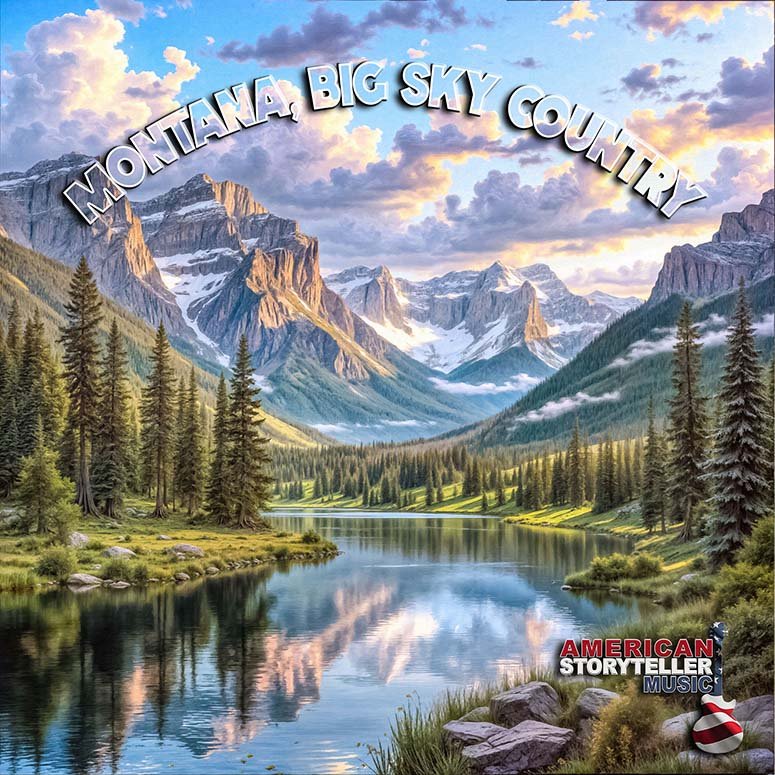
Streaming Services Music Link
Streaming Services Music Link
Streaming Services Music Link
Streaming Services Music Link
State of MT Home Pg. | State of MT Gallery Pg.
Why I Wrote This Song
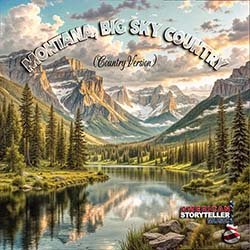
I wrote "Montana, Big Sky Country" as a straightforward travelogue tribute, letting Montana's most iconic places carry the whole song in sequence, Flathead Lake mirroring the sky, the Bitterroots piercing heaven's veil, Glacier's Going-to-the-Sun Road, the Absarokas standing proud, all the way to Yellowstone's northern door. I wanted the song to feel like an actual drive through the state, one landmark handing off to the next.
The story behind the song is how much I let the state's own nickname, Big Sky Country, do the emotional work rather than explaining it. Of prairie grass beneath the dome, of Big Sky Country calling me home, treats the sky itself as the unifying feature tying together mountains and prairie and glacier alike, because in Montana the sky really is the thing that makes everywhere else feel connected.
What I care about most is letting the wildlife move through the song as freely as the landscape, grizzlies in alpine meadows, elk crossing mountain streams, wolves running in wild dreams. Songs Across America has plenty of state tributes built around history or people. This one is built purely around scale, the Treasure State's own name for itself, and the plain, overwhelming size of what it's protecting.
Genre:
Sweeping, anthemic Americana travelogue built on a proud, wide-open chorus, structured as a west-to-east drive through Montana's mountains and plains.
Theme:
Montana's iconic mountain and prairie landscape, the unifying vastness of "Big Sky," wildlife roaming freely across protected wilderness, and travel as a sequence of landmarks rather than a single destination.
Primary Subject:
Montana in full, from Flathead Lake and the Bitterroot Range through Glacier National Park to the Absaroka Mountains and Yellowstone's northern gate.
Mood:
Expansive, reverent, and proud throughout.
Core Message:
Some places are best captured simply by naming their scale honestly, an enormous sky holding together mountains, prairie, and wildlife that could otherwise seem unconnected, and letting that overwhelming size speak for itself.
"Montana, Big Sky Country"
Original Lyrics by M.S. Mckenzie, All Rights Reserved
[Verse 1]
Where Flathead waters mirror sky
And osprey nests are built up high
Through Northern Rockies rising steep
Where mountain secrets still they keep
While Bitterroots pierce heaven's veil
Along the ancient tribal trail
These peaks that guard the western gate
Tell stories of the Treasure State
[Chorus]
Montana, So wild and free
From mountain peaks to rolling sea
Of prairie grass beneath the dome
Of Big Sky Country calling me home
[Verse 2]
Through Glacier's realm of rock and ice
Where mountain goats make paradise
Past Going-to-the-Sun Road's climb
Where glaciers mark the edge of time
By Hidden Lake's eternal glow
Through valleys carved by ancient snow
While grizzlies roam the alpine way
And mountain meadows bloom in May
[Verse 3]
The Absarokas stand so proud
Their peaks wrapped in a morning cloud
Where elk herds cross the mountain streams
And wolves still run in wild dreams
Past Yellowstone's great northern door
Where bison graze as long before
Through valleys time has yet to tame
Where wild beauty speaks your name
[Verse 4]
Across Big Sky's eternal plain
Where wind sweeps through the golden grain
While Missouri's waters flow
Through badlands where the cowboys go
Past buttes that rise like ancient kings
Where prairie falcons spread their wings
These endless plains of grass and light
Still dance beneath the stars at night
[Chorus]
Montana, So wild and free
From mountain peaks to rolling sea
Of prairie grass beneath the dome
Of Big Sky Country calling me home
Why I Wrote This Song
Song Description
"Montana, Big Sky Country" is a sweeping tribute to the immense landscapes, wildlife, waterways, and cultural character of Montana. Moving from the mountain country of the northwest to Glacier National Park, the Absaroka Range, Yellowstone's northern gateway, the Missouri River, the badlands, and the open plains of eastern Montana, the song presents the state as a place of extraordinary scale and variety. Its central image is the famous Big Sky itself, stretching above alpine peaks, prairie grasslands, river valleys, and distant horizons.
The song is structured like a musical journey across the Treasure State. Each verse explores a different region and reveals another part of Montana's identity. The western half of the state is defined by steep mountains, deep lakes, glacial valleys, and forests, while the eastern half opens into broad plains, golden grasslands, weathered buttes, and badlands. The contrast between these landscapes gives the song its sense of movement and grandeur.
The first verse begins at Flathead Lake, where the water reflects the sky and immediately establishes the song's theme of vastness. The image of "Flathead waters mirror sky" joins land, water, and atmosphere into one continuous scene. The lake appears almost limitless, reflecting Montana's expansive heavens while osprey nests rise above the shoreline. These birds add life and motion to the opening landscape and reinforce the wild, relatively unspoiled quality of the region.
The verse then moves into the Northern Rockies, where steep mountains rise above valleys and forests. The phrase "mountain secrets still they keep" gives the peaks an ancient, mysterious presence. These mountains have witnessed geological change, human migration, tribal history, exploration, settlement, and generations of wildlife, yet they remain silent guardians of their stories.
The Bitterroot Mountains are described as piercing "heaven's veil," a dramatic image that emphasizes their sharp, elevated ridgelines. The mountains appear to rise beyond the ordinary world and touch the sky itself. This imagery connects naturally to Montana's identity as Big Sky Country, where the relationship between land and atmosphere is one of the state's defining visual experiences.
The reference to an "ancient tribal trail" acknowledges that these landscapes were known, traveled, named, and understood long before modern state boundaries existed. Indigenous nations developed complex relationships with Montana's rivers, valleys, mountains, wildlife, and seasonal routes. The song does not treat the landscape as empty wilderness but as a place with a deep human history.
The line "These peaks that guard the western gate" presents the mountain ranges as the natural entrance to Montana from the Pacific Northwest and the northern Rockies. The peaks function almost like monumental sentinels, marking the transition into the Treasure State. Their stories represent not only geological time but also the cultural and historical identity of western Montana.
The chorus opens outward from the specific locations of the verse into a broad declaration of love for the entire state. "Montana, so wild and free" captures the central emotional tone of the song. Montana is presented as a place where nature still appears powerful, open, and capable of inspiring a sense of personal freedom.
The phrase "From mountain peaks to rolling sea of prairie grass" summarizes Montana's remarkable geographic contrast. The state has no ocean coastline, but the prairie is compared to a sea because of its vast, rolling surface. Wind moves through grass much like currents move through water, creating waves of gold and green beneath the open sky.
The image of the prairie beneath the "dome" refers to the huge arc of the sky. In Montana, distant horizons and relatively unobstructed views can make the heavens appear like a great blue ceiling stretching over the land. This gives the chorus both geographic scale and a feeling of shelter. The sky is immense, but it also forms a recognizable home above the landscape.
The final line, "Big Sky Country calling me home," gives the song its emotional center. Montana is not merely admired as a scenic destination. It exerts a personal pull. The state becomes a place of belonging, memory, freedom, and return. Whether the narrator was born there, once traveled there, or simply feels spiritually connected to it, the landscape creates a strong sense of homecoming.
The second verse turns to Glacier National Park and the dramatic geology of northern Montana. "Glacier's realm of rock and ice" immediately evokes towering mountains, lingering snowfields, glacial lakes, steep valleys, and exposed stone. The word "realm" makes the park feel like a self-contained kingdom shaped by ice and elevation.
Mountain goats appear within this high-altitude world, living among cliffs and rocky slopes that would be difficult for most animals to navigate. Their presence reinforces the rugged character of the park. The mountains may appear harsh and inaccessible to people, but they form a natural paradise for wildlife adapted to alpine environments.
Going-to-the-Sun Road becomes the central pathway through the verse. Its long climb carries travelers from lower valleys toward Logan Pass and the heart of Glacier's alpine landscape. The name itself is poetic and perfectly suited to the song's imagery, suggesting movement upward toward sunlight, open sky, and the high country.
The line "Where glaciers mark the edge of time" connects the surviving ice with geological history and environmental change. Glaciers are remnants of a colder world and powerful agents that carved the valleys, lakes, and ridges visible today. They act as markers of deep time, but their changing size also reminds the listener that even monumental landscapes are not permanent.
Hidden Lake is described as possessing an "eternal glow," capturing the luminous quality of alpine water surrounded by mountains and open sky. Depending on the light, such lakes can reflect blue, silver, turquoise, or gold. The word "eternal" gives the scene a timeless stillness, as though the lake exists beyond the pace of ordinary life.
The valleys are correctly portrayed as having been carved by ancient snow and ice. Glacier National Park's dramatic U-shaped valleys, cirques, ridges, and lake basins are lasting evidence of glaciation. The song turns that geological history into a simple visual story: snow accumulated, ice moved, and the landscape was reshaped over immense stretches of time.
Grizzly bears roaming the alpine country add a sense of wilderness and caution. They symbolize Montana's continuing connection to large, powerful wildlife that has disappeared from much of its former range. The blooming mountain meadows offer a softer contrast, filling the high country with seasonal color after winter releases its hold.
The third verse shifts south and east to the Absaroka Range and the northern entrance to Yellowstone. The Absarokas are described as standing proudly beneath morning clouds, giving them the presence of ancient monuments. Clouds wrapped around the peaks create a shifting boundary between earth and sky, continuing the song's recurring imagery of elevation and vastness.
Elk crossing mountain streams bring motion and seasonal rhythm to the scene. Their migrations through valleys and high country are part of the natural cycle of the Greater Yellowstone Ecosystem. The animals are not decorative additions to the landscape; they are active participants in its ecology.
The line "wolves still run in wild dreams" gives the wolf both a physical and symbolic role. Wolves do inhabit the Greater Yellowstone region, but in the song they also represent the survival of wildness itself. Their return to the ecosystem restored an animal long associated with fear, persecution, freedom, and the untamed character of the American West.
The phrase "Yellowstone's great northern door" points toward the Gardiner area and the historic northern entrance to Yellowstone National Park. This region connects Montana's valleys and mountain ranges with one of the most famous protected landscapes in the world. It is a gateway not only into the park but into a larger ecosystem spanning state boundaries.
The grazing bison evoke continuity with an earlier North America, when enormous herds moved across western grasslands. "As long before" suggests that the present scene offers a glimpse of a much older natural order. The animals carry a powerful cultural and ecological significance, particularly in relation to Indigenous history and the transformation of the West.
The valleys are described as places "time has yet to tame." This does not mean they have escaped all human influence, but it suggests that their scale and natural character remain dominant. Mountains, rivers, weather, and wildlife still shape the experience of the region more visibly than roads or buildings.
The line "where wild beauty speaks your name" personalizes the landscape. Montana is not simply observed from a distance. Its wildness seems to address the traveler directly. This continues the idea introduced in the chorus that the state calls people home.
The fourth verse leaves the mountain country and crosses the open plains of central and eastern Montana. The transition is important because it prevents the song from reducing Montana to the Rockies alone. Much of the state is prairie, river country, agricultural land, badlands, and high plains beneath an enormous sky.
The wind sweeping through golden grain gives the plains movement and texture. Fields and native grasslands bend beneath the wind, creating the visual impression of waves. The landscape may appear empty at first glance, but the verse reveals it as dynamic and full of life.
The Missouri River provides a geographic and historical thread through the state. Its waters flow through valleys, plains, reservoirs, and breaks, connecting Montana to the larger river system of the continent. The river has been central to Indigenous life, wildlife migration, exploration, transportation, settlement, agriculture, and the history of the American West.
The badlands introduce a more rugged and eroded landscape. Their exposed formations, dry gullies, cliffs, and unusual shapes contrast with both the mountains and smoother plains. The reference to cowboys connects this country to ranching traditions and to the enduring cultural image of Montana as part of the northern Great Plains and the West.
The buttes rising "like ancient kings" become the dominant monuments of the prairie. Unlike mountain ranges, buttes often stand alone above relatively level surroundings, making them appear especially dramatic. Their isolation gives them authority and dignity, as though they have watched over the plains for ages.
Prairie falcons spread their wings above this open country, adding speed and freedom to the scene. Their flight reinforces the importance of the sky throughout the song. In a landscape with few visual barriers, birds can be seen traveling across great distances, becoming natural symbols of independence.
The closing image of grass and light dancing beneath the stars captures the plains after dark. Montana's low population density and remote spaces can offer exceptionally broad views of the night sky. The landscape does not disappear after sunset; it becomes part of a quieter world of starlight, wind, shadow, and open distance.
The returning chorus unites the state's many regions. After traveling from Flathead Lake and the Bitterroots to Glacier, the Absarokas, Yellowstone, the Missouri, badlands, and prairie, the phrase "Montana, so wild and free" carries a fuller meaning. Wildness exists in different forms: alpine cliffs, grizzly country, bison valleys, flowing rivers, isolated buttes, and open grasslands.
The second appearance of "rolling sea of prairie grass" is especially effective after the eastern plains have been described. The listener now understands that the "sea" is not merely a metaphor but a defining part of Montana's geography. The mountains may dominate postcards and popular imagery, but the prairie gives the Big Sky its greatest sense of distance.
Musically, "Montana, Big Sky Country" would work well as an uplifting Americana, country-rock, folk-rock, or cinematic western anthem. The arrangement could begin with acoustic guitar, fiddle, mandolin, or a gentle piano line, creating the feeling of dawn over a lake or mountain valley. A restrained rhythm section could enter gradually as the first verse expands into the chorus.
The chorus should feel broad and open. Full drums, warm bass, electric guitar, fiddle, and layered vocal harmonies could create the impression of the landscape widening before the listener. Long sustained notes on "Montana" and "Big Sky Country" would allow the melody to reflect the scale of the state.
The Glacier verse could incorporate shimmering guitar, strings, or high piano notes to suggest rock, ice, and alpine light. The Absaroka and Yellowstone verse might use stronger percussion and lower instrumental tones to reflect bison, elk, wolves, and the powerful mountain setting.
The final plains verse could open the arrangement again, perhaps reducing the instrumentation briefly before gradually rebuilding. A spacious fiddle or pedal steel line could evoke wind moving across prairie grass, while acoustic guitar maintains the song's steady forward motion. The final chorus could be the fullest section, supported by broad harmonies and a strong instrumental lift.
The vocal delivery should be warm, sincere, and expansive. The singer should communicate affection and awe rather than exaggerated drama. A clear country-rock or folk vocal without excessive twang would suit the song's combination of regional identity and universal appreciation for nature.
The song's imagery is especially effective because it balances familiar Montana landmarks with broader natural themes. Glacier National Park and Going-to-the-Sun Road provide recognizable destinations, while Flathead Lake, the Bitterroots, the Absarokas, the Missouri River, badlands, buttes, and prairie grass create a more complete portrait of the state.
Wildlife also plays a major role in the song's sense of place. Ospreys, mountain goats, grizzlies, elk, wolves, bison, and prairie falcons occupy different elevations and ecosystems. Together they reveal Montana as a living network of water, forest, alpine terrain, river valleys, and grasslands.
The song also carries an underlying theme of continuity. Ancient tribal trails, glacially carved valleys, bison grazing as they did long ago, and buttes standing like old kings all connect the present landscape to a much deeper past. Montana is shown as a place where natural history and human history remain visible across the land.
Ultimately, "Montana, Big Sky Country" is a celebration of freedom, scale, and belonging. It honors the famous mountains of western Montana while also recognizing the quieter majesty of the plains, rivers, badlands, and eastern horizon. The state's beauty comes not from one landmark alone but from the way all these landscapes exist beneath the same immense sky.
The song presents Montana as both a real place and an emotional destination. Its mountains guard the west, its rivers carry history, its wildlife preserves a sense of ancient freedom, and its prairie stretches toward seemingly endless horizons. Through every verse, Big Sky Country becomes a symbol of the open spaces that can restore perspective, awaken wonder, and call the wandering heart home.



.jpg)