"The Big Lie, Democracy's Test©"
Lyrics by M. S. McKenzie (Unless Otherwise Noted) | Music Performed by Songs Across America or American Storyteller Music, All Songs Are Protected by ©
Streaming Services Music Link
Streaming Services Music Link
~ Associated District of Columbia Links ~
[ DC Home Pg. | DC Gallery Pg. | DC Attractions Pg. ]
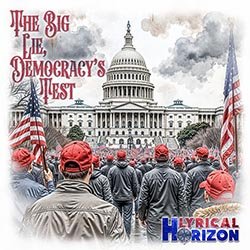
"The Big Lie, Democracy's Test"
Why I Wrote This Song
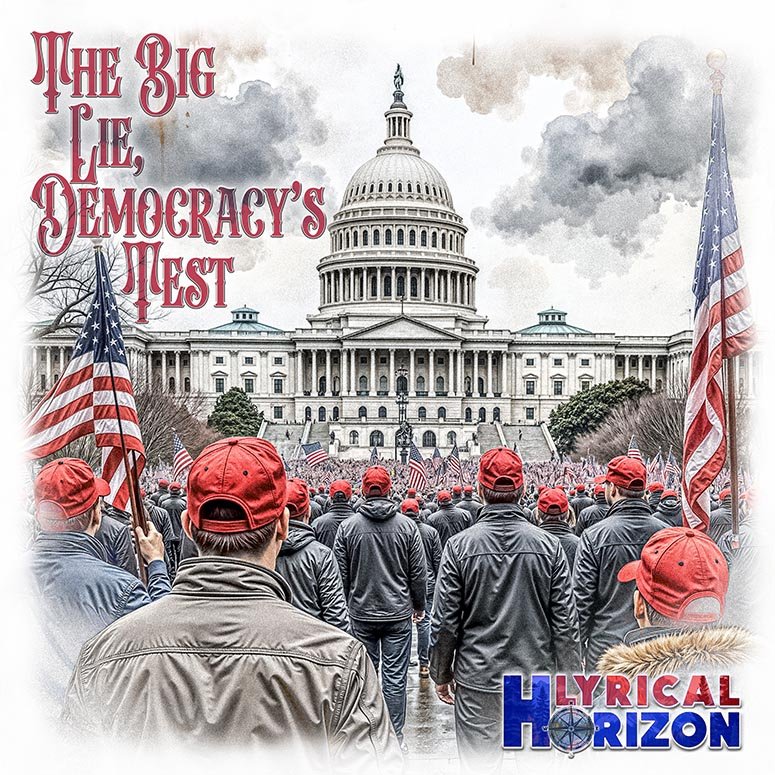
I wrote "The Big Lie, Democracy's Test" about a single day that tested whether this country's institutions could hold under real pressure, and I wanted the song to stay focused on that test rather than on any one person. Our sacred halls, once so proud and strong, witnessed a scene that went terribly wrong, is written from the position of someone who loves those halls and was shaken by watching them threatened.
The story behind the song is the line I built the whole thing around, our loyalty must lie not with one name, it's the Constitution that we proudly claim. I wanted the song's actual argument to be about that distinction, that democracy survives on loyalty to a system and a document rather than to any individual, and that the day it describes was frightening specifically because that distinction nearly failed.
What I care about most is the fourth verse, where the officers who stood firm and the three co-equal branches designed by the Founders get the emphasis, because I wanted the song to end up being about what held rather than only what nearly broke. Red and blue must join as one, to heal what hatred has undone, is the plea at the center of it. Songs Across America has room for our hardest, most recent history, and I wrote this one to argue that the Constitution, and the ordinary people who defended it that day, are what actually answered the test.
Genre:
Solemn, weighty Americana ballad built on a rising, hymn-like chorus, moving from somber reflection through righteous resolve toward a unifying plea.
Theme:
The events of January 6th as a test of democratic institutions, loyalty to the Constitution over any individual, the courage of those who defended the Capitol, and the plea for unity across political division.
Primary Subject:
The events at the U.S. Capitol on January 6th, 2021, and the constitutional balance of power that ultimately held.
Mood:
Solemn and shaken at the opening, deepening into resolute conviction, and closing on an earnest plea for unity.
Core Message:
Democracy is tested not in ordinary times but in the moments its institutions come under direct pressure, and what saves it isn't loyalty to any one person, but loyalty to the Constitution and the people willing to defend it when it matters most.
Original Lyrics by M.S. Mckenzie, All Rights Reserved
[Intro: Instrumental]
[Verse 1]
There once was a day that shook history
As cold winter skies hung over D.C.
Our sacred halls, once so proud and strong
Witnessed a scene that went terribly wrong
The "Big Lie" spread from his seat of power
Fueling that unchecked rage, hour upon hour
[Chorus: layered vocals]
Democracy's test was by those with no shame
From every corner of the nation, they came
But the voice of the people refused to fall
On that horrible day, when we saw it all
Our foundation shaken; our unity tried
As truth and deception fiercely collide
[Verse 2]
Words have power, words can bite
A president's voice sparked this fight
No storm appears from a clear blue sky
Democracy weeps when our leaders lie
Our loyalty must lie not with one name
It's the Constitution that we proudly claim
[Verse 3]
As violence reigned for hours on end
The one who could have called to mend
Sat watching Fox News, unmoved, unmade
His silence thundering like a cannonade
As pleas for help went unanswered still
A dereliction of duty and of highest will
[Verse 4]
Our officers stood brave and firm that day
As duty called, they summoned a way
Three balanced and co-equal branches rein
The powers that our most sacred laws contain
This balance that has stood the test of time
That our Founding Fathers carefully designed
[Verse 5]
Red and blue must join as one
To heal what hatred has undone
For no one side can stand alone
A house divided cannot atone
Each vote and voice and watchful eye
Democracy lives when each one tries
[Chorus: layered vocals]
Democracy's test was put to the flame
From every corner of the nation, they came
But the voice of the people refused to fall
On that horrible day, when we saw it all
Our foundation shaken; our unity tried
As truth and deception fiercely collide
Yet still we stand, though gravely scarred
The promise of freedom cannot be barred
Song Description
"The Big Lie, Democracy's Test" is a forceful civic protest song about the January 6 attack on the United States Capitol, the campaign of election falsehoods that preceded it, and the continuing responsibility of citizens and public officials to defend constitutional democracy. Written as both a historical account and a warning, the song argues that democratic government is not self-sustaining. It survives only when truth is protected, lawful elections are respected, public servants fulfill their duties, and citizens place loyalty to the Constitution above loyalty to any political leader.
The song's title establishes its central conflict immediately. "The Big Lie" refers to the false narrative that a legitimate presidential election had been stolen, while "Democracy's Test" describes the institutional and moral crisis that followed. The title places deception and democracy in direct opposition. One depends upon repetition, anger, and unquestioning allegiance; the other depends upon evidence, lawful processes, accountability, and public trust.
The instrumental introduction allows the seriousness of the subject to develop before the first words are heard. Musically, it could begin with a restrained piano figure, low strings, distant percussion, or a solemn guitar progression. The introduction should suggest approaching danger rather than immediate chaos. A slow rhythmic pulse could resemble a clock, a march, or the gathering momentum of events that can still be stopped but are moving steadily toward confrontation.
The first verse opens with the language of historical rupture: "There once was a day that shook history." This phrasing gives the song the quality of a modern cautionary tale, as though the narrator is recounting an event that future generations must study and remember. The cold winter sky over Washington, D.C., provides both a physical setting and an emotional atmosphere. The chill in the air mirrors the fear, hostility, and national division surrounding the day.
The Capitol is described as "our sacred halls," presenting it not merely as a government building but as a symbol of representative democracy. Its significance comes from the constitutional process conducted within it and from the principle that political power is transferred through ballots rather than violence. By calling the halls proud and strong, the song emphasizes the shock of seeing a place associated with order and continuity become the scene of disorder and intimidation.
The verse then identifies the preceding cause rather than treating the violence as an inexplicable outburst. The "Big Lie" is described as spreading from a seat of power and fueling unchecked rage hour after hour. This imagery treats political deception almost like an accelerant poured upon an already volatile situation. The anger did not emerge spontaneously. It was cultivated, reinforced, and given permission to grow.
The first chorus broadens the focus from individual responsibility to a national democratic crisis. The layered vocals can make the chorus sound like a collective public voice, contrasting with the division depicted in the verses. The phrase "Democracy's test" suggests that January 6 tested more than the security of one building. It tested whether institutions, elected officials, law-enforcement officers, and citizens would continue to honor the lawful results of an election under extraordinary pressure.
The line "From every corner of the nation, they came" gives the event a troubling national scale. The participants were not portrayed as belonging to one isolated locality. They converged upon the capital carrying grievances, false convictions, and a determination to disrupt a constitutional proceeding. This movement toward Washington contrasts with the democratic movement of votes being counted across the country. One force attempts to overturn the process through intimidation, while the other represents the lawful voice of millions of citizens.
"But the voice of the people refused to fall" is the chorus's first statement of resilience. The democratic process was endangered, delayed, and publicly attacked, but it was not permanently silenced. The line represents not one political party or candidate, but the principle that election outcomes must be determined by lawful votes rather than by whoever can create the greatest threat.
The chorus's final images describe the country's foundation being shaken while unity is placed under strain. Truth and deception are personified as opposing forces colliding in full public view. This conflict is central to the song because democracy requires disagreement to occur within a shared factual reality. When evidence itself is rejected and loyalty becomes more important than truth, ordinary political competition can become an attack on democratic legitimacy.
The second verse turns directly to the destructive potential of political language. "Words have power, words can bite" is a simple but effective warning that public rhetoric can produce consequences far beyond the moment in which it is spoken. Words can reassure, inform, or unify, but they can also inflame resentment, manufacture enemies, and convince people that unlawful actions are justified.
The assertion that a president's voice "sparked this fight" emphasizes the exceptional power of presidential communication. A president does not speak with the influence of an ordinary private citizen. Presidential words carry institutional authority and can shape how millions of people interpret events. When such authority is used irresponsibly, rhetoric can become a catalyst for fear and aggression.
The line "No storm appears from a clear blue sky" rejects the idea that the attack was sudden, isolated, or unforeseeable. The storm metaphor connects the riot to a longer period of gathering political pressure. False claims, public accusations, repeated demands, and escalating rhetoric formed the atmospheric conditions from which the violence emerged. The song therefore treats January 6 not only as an event, but as the result of accumulated choices.
"Democracy weeps when our leaders lie" turns the political crisis into a moral injury. Democracy is personified as something capable of suffering. The image suggests that official deception does more than mislead voters. It damages faith in institutions, weakens civic relationships, and makes peaceful self-government more difficult.
The verse concludes with one of the song's most important declarations: loyalty must not belong to one name. This challenges political personality cults and the belief that allegiance to a leader should override allegiance to law. The Constitution is presented as the proper object of civic loyalty because it establishes offices and limits their power. Presidents, legislators, and judges are temporary occupants of public positions; the constitutional order is intended to remain above them.
The third verse moves into the hours of violence and concentrates on presidential inaction. Its opening line places the listener inside an extended period of crisis. "As violence reigned for hours on end" emphasizes duration. The attack was not a fleeting incident but a prolonged emergency during which people inside and outside the Capitol waited for an effective response.
The next lines focus upon the individual who possessed a unique ability to influence the attackers and call for the violence to end. The wording "the one who could have called to mend" suggests both constitutional responsibility and moral opportunity. A clear, forceful appeal might have helped restore order, reassure the country, and separate legitimate political support from violent action.
Instead, the verse portrays a president watching television while the crisis unfolds. The phrase "unmoved, unmade" communicates emotional and presidential paralysis. It suggests not merely a failure of communication, but a failure to rise to the demands of the office at a moment when leadership was urgently required.
"His silence thundering like a cannonade" is the verse's strongest paradox. Silence is normally associated with absence, but here it becomes deafening. Each moment without decisive intervention acquires moral weight. The comparison to artillery fire suggests that inaction can have consequences as powerful as spoken commands.
The unanswered pleas for help intensify the sense of abandonment. Public officials, staff members, officers, and others were confronting danger while requests for presidential action remained unfulfilled. The verse characterizes this as a dereliction of duty, framing the failure not primarily as a question of political strategy but as a violation of the responsibilities attached to the presidency.
The fourth verse shifts attention away from failed leadership and toward those who defended the Capitol. The officers are described as brave and firm, emphasizing the physical and psychological pressure they faced while attempting to protect people, maintain order, and secure the constitutional proceeding. "As duty called, they summoned a way" suggests that courage did not require the absence of fear. It required action despite confusion, danger, and inadequate preparation.
The verse then expands from individual bravery to the constitutional system itself. The reference to three balanced and co-equal branches places the attack within the broader structure of American government. Legislative, executive, and judicial powers are separated so that no single office or individual can control the entire system.
The language of balance is essential to the song's argument. Constitutional democracy does not depend upon the goodness of one leader. It depends upon divided authority, institutional restraints, lawful procedures, and the willingness of officials to resist abuses of power. The three branches are not obstacles to effective government; they are safeguards against authoritarian control.
The reference to the Founding Fathers connects the modern crisis to the original constitutional concern about concentrated power. The system was designed with the understanding that ambition, fear, factional loyalty, and personal interest could threaten liberty. Although the constitutional framework has evolved and remained incomplete in many areas, its system of checks and balances is presented here as a defense against one person's attempt to override the electorate.
The fifth verse addresses the work of recovery. "Red and blue must join as one" calls for citizens across the partisan divide to defend democratic rules even while continuing to disagree about policies and values. The song does not ask Americans to abandon political differences. It asks them to preserve the constitutional arena within which those differences can be debated peacefully.
The line "To heal what hatred has undone" recognizes that political violence creates damage beyond broken windows or interrupted proceedings. It damages relationships between citizens, trust in elections, faith in public institutions, and confidence that disagreement can remain nonviolent. Healing therefore requires more than moving past the event. It requires confronting the falsehoods and resentments that made the event possible.
"For no one side can stand alone" warns against treating democracy as the possession of a single party. Constitutional government requires participation, restraint, and good faith from people across the political spectrum. A democracy in which each side accepts elections only when it wins cannot remain stable.
The reference to a divided house recalls Abraham Lincoln's warning that a nation fundamentally divided against itself cannot endure indefinitely. Here, the image is adapted to the aftermath of political violence. Division cannot repair division, and partisan retaliation cannot restore democratic trust. Accountability may be necessary, but it must remain grounded in evidence and law rather than vengeance.
The closing lines of the verse turn democratic survival into an everyday responsibility. Each vote matters, but voting alone is not sufficient. Every voice and "watchful eye" must help protect public institutions from corruption, intimidation, disinformation, and abuses of authority. Democracy lives only when people participate, remain informed, and refuse to surrender civic responsibility to political personalities.
The final chorus returns with a significant change: democracy's test is now "put to the flame." Fire imagery intensifies the danger. A flame can expose weakness, destroy what is fragile, or test the strength of what survives. The democratic system is therefore portrayed as scarred but still standing.
The repetition of "From every corner of the nation, they came" now carries the full weight of the preceding verses. The listener has heard how rhetoric, deception, institutional pressure, violence, inaction, and constitutional resistance became connected. The attack is no longer portrayed as an isolated moment but as the visible culmination of a broader assault upon public trust.
The voice of the people again refuses to fall. This repetition is important because it establishes democratic legitimacy as the song's moral center. The lawful vote survives not because the system is invulnerable, but because enough individuals and institutions continue to honor their obligations.
The phrase "Yet still we stand, though gravely scarred" avoids an easy or triumphalist conclusion. Democracy survived the immediate event, but survival did not erase the damage. The scars include continued election denial, political distrust, threats against public servants, conspiracy theories, and deepening social hostility. A scar is evidence both of injury and of endurance.
The final declaration, "The promise of freedom cannot be barred," ends the song with determined hope. Freedom is not presented as automatic or permanently secured. It is a promise that must repeatedly be defended from deception, intimidation, and the concentration of power. The word "barred" also carries a physical resonance, recalling barricades and doors while asserting that democratic aspiration cannot be permanently confined.
Musically, "The Big Lie, Democracy's Test" could be developed as a dramatic folk-rock, Americana, orchestral rock, or contemporary protest anthem. The arrangement should balance solemn historical reflection with rising urgency. A low piano, acoustic guitar, cello, or restrained synth pad could introduce the first verse, while drums and electric guitar gradually emerge as the narrative approaches the chorus.
The layered chorus vocals are especially important. They can represent the collective voice of citizens refusing to surrender democratic principles. The lead vocal might carry the primary melody while lower and higher harmonies repeat key phrases such as "Democracy's test," "the voice of the people," or "truth and deception." The harmonies should sound resolute rather than celebratory.
The third verse could become the darkest musical section. Percussion may become heavier and more deliberate, with low strings, distorted guitar textures, or a sustained bass note emphasizing the prolonged crisis. The line about silence thundering like a cannonade could be followed by a brief instrumental pause, allowing the accusation to register before the verse continues.
The fourth verse could introduce a gradual sense of institutional resistance. Snare drum, rising strings, or stronger guitar chords could accompany the reference to officers and the three branches of government. The music should not sound militaristic, but it could convey discipline, duty, and the restoration of constitutional order.
The fifth verse should begin the transition from accusation to civic resolve. Additional harmonies, brighter chords, or a more open rhythmic pattern could support the call for red and blue to join in defense of democracy. The final chorus could then expand to full instrumentation, with prominent drums, layered vocals, strings, electric guitar, and possibly a restrained brass section.
The lead performance should be serious, mature, and emotionally controlled. The song's power would come from conviction rather than shouting. A voice with a slightly weathered quality could communicate disappointment, grief, and determination. The singer should sound less like a partisan spokesperson and more like a citizen documenting a national warning.
Ultimately, "The Big Lie, Democracy's Test" is a song about the fragility and resilience of constitutional government. It condemns the deliberate spread of election falsehoods, the use of presidential influence to inflame public anger, the failure to act decisively during violence, and the elevation of personal loyalty above the Constitution. At the same time, it honors the officers, public servants, institutions, and citizens who helped preserve the lawful transfer of power.
The song's deeper message extends beyond January 6. It warns that democracy can be weakened gradually whenever lies are normalized, political opponents are treated as enemies, violence is excused, or leaders are placed above legal restraint. Its final hope rests not upon the perfection of institutions, but upon the willingness of ordinary citizens to remain watchful, value truth, accept lawful outcomes, and defend the constitutional process even when those outcomes disappoint them.
In that sense, democracy's test did not end when the Capitol was secured. The test continues whenever Americans must choose between evidence and deception, constitutional loyalty and personal allegiance, peaceful participation and political intimidation. The song asks the listener to remember what happened, understand how it happened, and recognize that the promise of freedom survives only when people are willing to protect it.





.jpg)