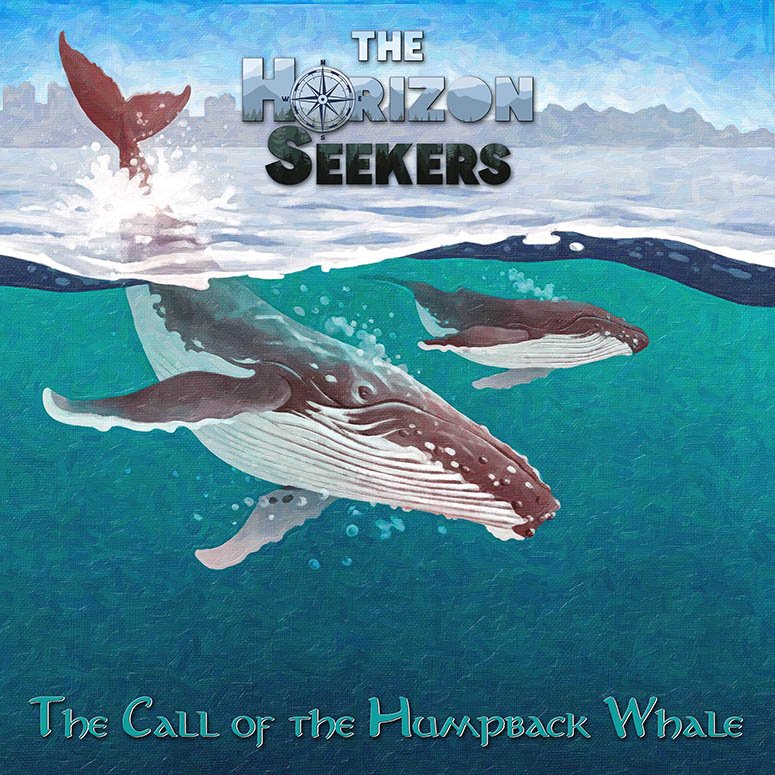
"The Call of the Humpback Whale©"
Lyrics by M.S. McKenzie | Performed by The Horizon Seekers & Is Protected by Copyright
~ Associated State Links ~
The Call of the Humpback Whale
[Ethereal female vocals, whale-song like melody]
Oooooooh, ooooooh, ooh, ooooooh, oooh
Oooooooh, ooooooh, ooh, ooooooh, oooh (echoing)
[Verse 1]
Ancient ones beneath the waves
Singing songs across the deep
Through canyons carved in ocean floors
Secrets of the ages keep
From California's golden shores
To Washington's emerald seas
[Verse 2]
Humpback songs and grey whale calls
Echo through cathedral halls
Of kelp forests swaying tall
Where life's abundance flows for all
From Oregon's misty coast
To places we may never know
[Pre-chorus]
Their voices echo through the blue
A legacy we must preserve
These sanctuaries hold the truth
Of life beneath the surface curves
[Chorus]
Giants of the endless seas
Dancing through eternity
Sacred waters, keep them free
Guardian of their destiny
Let their songs ring pure and true
Through the depths of ocean blue
[Verse 3]
Migration paths of ancient times
Through protected waters flow
Where mothers nurse their calves in peace
Safe from dangers down below
These sanctuaries must endure
For generations yet to come
[Verse 4]
Beneath the surface mysteries
Of deep-sea canyons yet unknown
Where gentle giants glide with grace
Through waters that they call their home
Each breach and splash tells stories old
Of freedom in these rolling seas
[Bridge]
Listen to their ancient tales
Wisdom of the mighty whales
Rising on the ocean swells
Stories that the deep sea tells
[Chorus]
Giants of the endless seas
Dancing through eternity
Sacred waters, keep them free
Guardian of their destiny
Let their songs ring pure and true
Through the depths of ocean blue
[Final Chorus]
Giants of the endless seas
Dancing through eternity
Sacred waters, keep them free
Guardian of their destiny
Let their songs ring pure and true
Through the depths of ocean blue
[Instrumental finale]
"The Call of the Humpback Whale" is an atmospheric environmental song celebrating the whales of the Pacific Ocean and the protected marine habitats that sustain them. Centered on the mysterious songs of humpback whales, the lyrics travel along the coastlines of California, Oregon, and Washington while descending into kelp forests, submarine canyons, migration corridors, and largely unexplored ocean depths. The result is both a tribute to the majesty of whales and a gentle but urgent appeal to preserve the sanctuaries they depend upon.
The song presents whales as far more than impressive marine animals. They are portrayed as ancient travelers, singers, mothers, storytellers, and living connections to a world that existed long before human civilization. Their voices move across vast distances beneath the sea, carrying patterns and messages through an environment that remains largely hidden from human sight. By listening to those voices, the song suggests that humanity may learn something about continuity, freedom, interdependence, and its responsibility toward the natural world.
The opening immediately establishes an ethereal, underwater atmosphere. The wordless female vocals imitate the distant, mournful beauty of whale song without attempting to reproduce it literally. The long "oooooh" phrases feel suspended in space, as though they are traveling through layers of deep water and returning in softened echoes. This introduction invites the listener to leave the familiar world above the surface and enter a vast acoustic realm where sound travels farther than sight.
The echoing vocals also give the opening a spiritual quality. They can be interpreted as the whales calling to one another across the ocean, but they may also represent the ocean itself responding. Because the melody contains no words, it transcends ordinary language and prepares the listener for a song concerned with communication between species, generations, and natural worlds.
The first verse introduces the whales as "ancient ones beneath the waves." This description gives them dignity and a sense of timelessness. Whales have followed ocean currents and migration routes for countless generations, and the song imagines them carrying inherited knowledge through those journeys. Their songs are not described merely as sounds but as vessels holding "secrets of the ages."
The image of whales singing across the deep emphasizes the enormous scale of their environment. Beneath the visible ocean surface lies a hidden geography of ridges, valleys, trenches, and canyons. The line about canyons carved into the ocean floor reminds the listener that the undersea world possesses landscapes as dramatic as those found on land. These submerged formations provide habitat, influence currents, concentrate nutrients, and create conditions that support complex marine communities.
The verse then establishes the song's geographic reach, moving from California's "golden shores" to Washington's "emerald seas." These color-based descriptions reflect the distinctive identities of the Pacific Coast. California evokes sunlight, cliffs, beaches, and warmer coastal light, while Washington suggests deep green forests, cooler waters, mist, and rugged coastal wilderness. The whales connect these distant regions through migration, demonstrating that marine life does not recognize the political boundaries humans place upon maps.
The second verse expands the song's focus beyond humpback whales by mentioning gray whale calls. This broadens the piece into a celebration of the great migratory whales of the eastern Pacific. Humpbacks are associated with elaborate songs, acrobatic breaches, and long-distance migration, while gray whales are known for traveling close to shore along one of the world's most remarkable mammalian migration routes.
Their calls are said to echo through "cathedral halls" formed by kelp forests. This is one of the song's strongest images. The tall kelp becomes the architecture of an underwater sanctuary, rising like pillars and moving slowly with the currents. Describing these habitats as cathedrals gives them a sense of reverence while avoiding the need for a formal religious interpretation. The ocean itself becomes a sacred space through its beauty, complexity, and capacity to support life.
Kelp forests are depicted as places where abundance "flows for all." This line emphasizes ecological interdependence. Kelp habitats support fish, invertebrates, marine mammals, birds, and countless smaller organisms. The flowing movement of the forest also mirrors the flow of nutrients, energy, migration, and life throughout the marine ecosystem.
The verse continues northward along Oregon's misty coast before moving toward "places we may never know." This phrase introduces wonder and humility. Much of the ocean remains unseen, unmapped in detail, or poorly understood. The song acknowledges that human knowledge is limited and that countless marine experiences occur beyond observation. Whales enter those distant places and become symbolic guides into a world humanity can only partially comprehend.
The pre-chorus shifts the song from admiration toward responsibility. The whales' voices echo through "the blue," transforming the ocean into an immense chamber of communication. Their songs become a legacy, something inherited from the past and entrusted to the present.
The statement that this legacy "must" be preserved introduces the song's conservation message without interrupting its poetic tone. Protection is not presented as optional generosity toward wildlife. It is a duty arising from the recognition that these animals, migration routes, feeding grounds, and breeding areas possess value that extends beyond immediate human use.
The sanctuaries are described as holding "the truth" of life beneath the surface. This truth may refer to the interconnectedness of ocean ecosystems, the vulnerability of marine animals, or the vast amount of life that exists beyond ordinary human awareness. The unusual phrase "surface curves" reinforces the feeling of a rounded, moving world, suggesting waves, the curvature of the Earth, and the boundary separating the human world from the depths below.
The chorus opens the song into its broadest emotional and melodic statement. The whales become "giants of the endless seas," emphasizing their physical scale while placing them within an environment that appears limitless. Yet the chorus also shows that these giants remain vulnerable and dependent upon healthy waters.
"Dancing through eternity" gives their movement elegance and continuity. Whales do not simply swim; they glide, turn, breach, dive, and rise in patterns that resemble a slow and powerful dance. The word "eternity" connects individual whales to the generations that traveled before them and those that may follow if their habitats remain protected.
The plea "Sacred waters, keep them free" treats the ocean sanctuary almost as a living guardian. Freedom in this context means the ability to migrate, feed, communicate, reproduce, and raise young without intolerable interference. It also suggests freedom from entanglement, ship strikes, excessive underwater noise, pollution, habitat destruction, and other pressures created by human activity.
The line "Guardian of their destiny" is intentionally open to interpretation. It may address the sanctuary itself, the ocean, the listener, or humanity collectively. This ambiguity strengthens the message by implying that guardianship is shared. Protected areas can establish boundaries and regulations, but their success ultimately depends upon people choosing to respect and maintain them.
The chorus concludes with an appeal to let whale songs remain "pure and true" throughout the ocean depths. Purity here suggests an environment in which natural communication is not overwhelmed by industrial noise or other disruption. Truth suggests authenticity, continuity, and the ability of the whales to remain fully themselves within their natural world.
The third verse focuses upon migration and reproduction. The routes are described as ancient, reinforcing the idea that whales follow inherited pathways shaped by instinct, memory, geography, food availability, and seasonal change. These journeys may span thousands of miles, connecting cold feeding waters with warmer regions where calves are born and raised.
The line about migration through protected waters shows how marine sanctuaries can function as parts of a much larger ecological network. No single protected area can contain the entire life of a migratory whale. Conservation must therefore consider corridors, seasonal habitats, international waters, and multiple coastal regions.
The image of mothers nursing calves in peace gives the song its most tender moment. The enormous size of adult whales contrasts with the vulnerability of their young. A calf depends upon its mother for nourishment, guidance, protection, and the knowledge required for migration. By concentrating on motherhood, the verse transforms conservation from an abstract policy concern into the protection of families and future generations.
"Safe from dangers down below" introduces a subtle sense of threat. The line may refer to natural dangers, but within the larger conservation message it also suggests human-created risks hidden beneath or upon the water. These dangers are not listed directly, allowing the song to preserve its lyrical flow while still reminding the listener that safety cannot be taken for granted.
The declaration that sanctuaries "must endure" is one of the song's clearest calls to action. Protection cannot be temporary, symbolic, or dependent upon changing public attention. It must continue long enough for future generations of whales and people to inherit functioning marine ecosystems.
The fourth verse returns to mystery and exploration. "Beneath the surface mysteries" describes the ocean as a place of continuing discovery. Deep-sea canyons remain partly unknown, and the song uses this uncertainty to inspire respect rather than fear. The unknown is presented as something valuable in itself, worthy of protection even before humanity fully understands it.
The whales are again described as gentle giants, combining strength with grace. Their ability to glide through deep water gives them an almost effortless quality, although their lives require immense journeys, constant feeding, communication, and adaptation.
The phrase "waters that they call their home" challenges a human-centered view of the ocean. These waters are not empty spaces awaiting use. They are inhabited environments with histories, patterns, and relationships. Calling the ocean their home gives whales a claim to belonging and reinforces the ethical argument that their needs must be considered.
Each breach and splash becomes a form of storytelling. A whale rising from the water is visually spectacular, but the song interprets the act as more than entertainment. It becomes a reminder of inherited freedom and of lives continuing beyond human observation. The "stories old" carried by these actions connect movement, memory, and survival.
The bridge simplifies the language and directly invites the listener to pay attention. "Listen to their ancient tales" is both literal and symbolic. Humanity can listen to recorded whale songs, scientific observations, migration data, and Indigenous or coastal traditions associated with whales. More broadly, listening means recognizing that other forms of life possess histories and modes of communication that deserve respect.
The "wisdom of the mighty whales" does not imply that whales possess human philosophy. Instead, their wisdom is represented through endurance, adaptation, social bonds, migration, and participation in ocean ecosystems. Their lives demonstrate an ancient form of belonging within the natural world.
The rising ocean swells give the bridge a rhythmic physicality. The music could lift and fall like waves beneath the vocal melody. The final line, "Stories that the deep sea tells," expands the whales' voices into part of a larger ocean narrative. Currents, tides, animals, geological formations, and changing seasons all contribute to that story.
The repeated chorus reinforces the song's anthem-like conservation message. After the listener has traveled through migration routes, kelp forests, deep-sea canyons, nursery areas, and coastal sanctuaries, the appeal to keep the whales free carries greater emotional weight.
The final chorus repeats rather than substantially changing the words, creating a sense of ritual and commitment. This repetition can make the message feel timeless, much like the recurring cycles of migration. Each return of the chorus resembles another season, another journey, or another whale song moving through the ocean.
The instrumental finale allows the song to return to the wordless world from which it began. The arrangement could feature sustained female vocalizations, low strings, ambient synthesizer textures, piano, flute, cello, or reverberant guitar. Whale-song-inspired phrases might reappear in the distance, gradually fading as though the animals are continuing their journey beyond the listener's reach.
The ending should feel expansive rather than final. The whales' lives continue after the song ends, moving through sanctuaries, coastal waters, and distant regions that humans may never witness. This open conclusion reinforces the idea that nature does not exist only when people are watching it.
Musically, "The Call of the Humpback Whale" is well suited to an ethereal cinematic folk, ambient orchestral, new-age, or atmospheric adult contemporary arrangement. The verses could use a gentle pulse with piano, acoustic guitar, soft percussion, and flowing synthesizer pads. Deep cello notes or low electronic textures could suggest the pressure and scale of the ocean depths.
The pre-chorus could gradually introduce strings and layered harmonies, creating the sensation of rising toward the surface. The chorus should become wider and more luminous, with fuller percussion, sweeping strings, sustained guitar, and multiple vocal layers. The music should feel majestic without becoming aggressive, reflecting the whales' combination of enormous power and graceful movement.
The wordless female vocals are essential to the song's identity. They should sound distant, fluid, and haunting, with long notes that bend gently in pitch. Reverb and delay could create the impression of sound traveling through open water. Care should be taken to keep the effect organic and emotionally expressive rather than overly artificial.
The lead vocal should convey reverence, warmth, and quiet urgency. The conservation message will be more effective if the singer sounds awed by the whales rather than angry at the listener. The emotional progression should move from mystery and wonder to responsibility and finally to hope.
The song's use of Pacific Coast geography gives it a strong sense of place. California, Oregon, and Washington are connected not only by roads and shorelines but by ocean currents, marine habitats, and whale migrations. The coast becomes a continuous living corridor rather than a collection of separate states.
The imagery of golden shores, emerald seas, misty coasts, kelp cathedrals, underwater canyons, rolling swells, and endless blue gives the song a highly visual character despite its focus on sound. This combination of visual beauty and acoustic mystery makes the listener feel suspended between the world above the waves and the largely unseen world below.
Ultimately, "The Call of the Humpback Whale" is a song about listening. It asks humanity to hear the voices of creatures whose lives extend across immense distances and generations. It asks people to recognize the ecological richness beneath the ocean's surface and to protect places they may never personally visit.
The whales' songs become symbols of survival, memory, and freedom. Their continuation depends upon healthy oceans, protected migration routes, safe nursery grounds, and a human willingness to act as responsible guardians rather than careless intruders. Through its ethereal vocals, coastal imagery, and conservation message, the song reminds listeners that the ocean is alive with stories and that the call of the humpback whale is one of its most ancient and powerful voices.












.jpg)